

Introduction
- Brief overview of the jail delivery exercise and its significance.
Imagine being subjected to spend time in a custodial centre as a pretrial detainee, not because you pose a threat to society, but simply because you are homeless and were arrested and charged to court for nuisance or is it spending time as a pretrial detainee for picking an orange from someone else’s tree or because you owe someone the sum of N29,000. These are not exaggerated scenarios; they are the painful overlooked realities behind the stories for many pretrial detainees in Nigeria.
Overcrowding in custodial centres remains a persistent challenge within the Nigerian Criminal Justice System. These facilities are often stretched far beyond their intended capacity, in many cases accommodating more than twice the number of inmates they were originally designed to hold.
In response to this, the judiciary along with her partners has initiated several interventions to mitigate this harrowing situation. One notable measure is the conduct of jail delivery exercises. This activity is typically led by the Chief Judge of a state (or of the FCT as the case may be) and supported by High Court Justices, Magistrates, the Administration of Criminal Justice Monitoring Committee (ACJMC) which is the statutory body mandated by law to ensure the effective implementation, monitoring, and coordination of the provisions of the ACJA/ACJL across all criminal justice sector institutions in Nigeria, Legal Aid Council, Nigerian Bar Association and Civil Society Organisations.

The jail delivery exercise involves a comprehensive review of pretrial detainees’ cases, especially those who have been in custody for prolonged periods. Many of these individuals have spent more time in detention than the sentence they would have received if tried within a reasonable time as provided by the Law. In such cases, the Chief Judge using his discretion can order their release. It also presents an opportunity for the Chief Judge to grant bail to pretrial detainees who have not been granted bail and in cases where a detainee has been granted bail and is unable to perfect bail conditions, the Chief Judge may order that the terms be reviewed and made less stringent.
Another significant objective of this exercise is the review of cases involving convicted detainees who were given the option of a fine. During this process, the Chief Judge engages with the detainee, reviews the court’s conviction, and inquires whether any criminal justice partners such as civil society organisations like the Public and Private Development Centre amongst many others are willing to cover the fine. Where such support is available, the Chief Judge then orders the release of the detainee pending when all obligations to the court and the custodial centres have been fulfilled. The Chief Judge’s directive may also include measures to expedite trial for pretrial detainees.
- Why Keffi, Kuje, and Suleja Custodial Centres were chosen.
You may be wondering why the Chief Judge of the FCT would visit a custodial centre outside his jurisdiction. This is due to the severe overcrowding at the Kuje Custodial Centre located in the FCT. The facility has a capacity of 560 but currently houses over 1,000 detainees.

As a result, courts in the FCT remand detainees in custodial centres in neighbouring states such as Nasarawa and Niger, where the Keffi and Suleja custodial centre is located. Ironically, Keffi Custodial Centre is also overstretched, operating far beyond its capacity of 340 by holding over 700 detainees. Same as Suleja operating beyond its capacity of 250 by holding over 400 detainees. These are not just numbers, they are reflections of the decay in our criminal justice system.
- The shared goal: improving access to justice and human rights for detainees.
At the heart of the jail delivery exercise is a shared commitment to justice, fairness, and human dignity. For the Public and Private Development Centre (PPDC), this initiative aligns deeply with our mission to promote transparent and accountable governance and to strengthen access to justice for all, especially the most vulnerable and the undeserved.
Our participation in the jail delivery exercise is more than an intervention; it is a reflection of our unwavering belief that no one should be forgotten in the cracks of the justice system.
The mandate has been clear: amplify the voices of the marginalized, support the judiciary and civil society in practical ways, and drive meaningful change through collaboration and advocacy. Through collaborations like this, PPDC reinforces its role in pushing for a justice system that not only punishes but also protects, reforms, rehabilitates and aids reintegration.
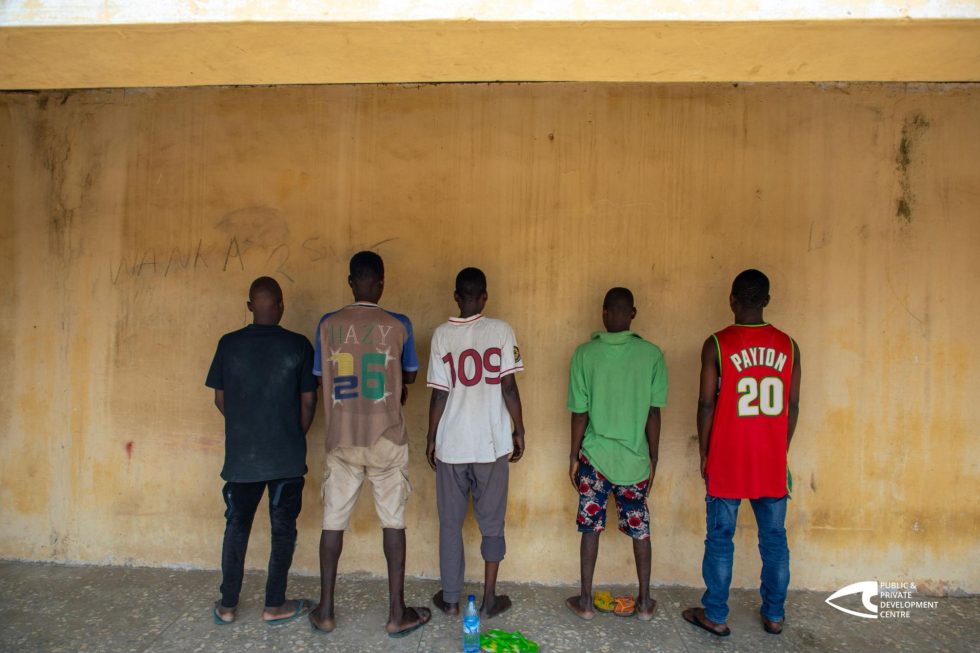
The overcrowded cells of Keffi, Kuje, and Suleja may seem distant to many, but the lives behind those walls matter. And until every detainee is given a fair and timely hearing, PPDC will remain committed to doing the work that saves lives and restores hope.
Success Story: Restoring Dignity and Hope
Behind every jail delivery exercise are real people whose lives are changed forever. One striking story that left an indelible mark in the minds of stakeholders during the Kuje custodial visit was that of an aged man, frail, quiet, and nearly forgotten by the system. He had spent over a decade in pretrial detention. Accused of a crime that was never proven, he endured 11 long years behind bars, waiting for a fair trial that never truly came.
Year after year, he remained in the shadows of the justice system. He was seldom taken to court, and when he was, it was often only to be sent back with little or no progress. The justice guaranteed by law slowly faded into an illusion, distant and unreachable.
His discharge on the day of the visit was not just a moment of personal liberation, it became a powerful symbol of what is broken and what must urgently be fixed. As he stepped out of the gates, eyes sunken but defiant, his silent walk to freedom told a louder story than any speech could. We were once again reminded that justice delayed, especially for the vulnerable and voiceless, is justice denied.
This single case gave a human face to the statistics, reinforcing the critical need for meaningful reform in Nigeria’s pretrial detention system. It underscored the importance of ongoing efforts to ensure that no one, especially the most vulnerable, remains locked away without a fair and timely trial.
It is for people like this that we keep showing up. Every intervention, every bail posted, every conversation held behind prison walls is part of our mission to reform pre-trial detention in Nigeria, a step toward justice, dignity, and a system that treats everyone fairly.