
By Elaska Mark
For many Nigerians, corruption is no longer just a governance issue, it is a lived reality.
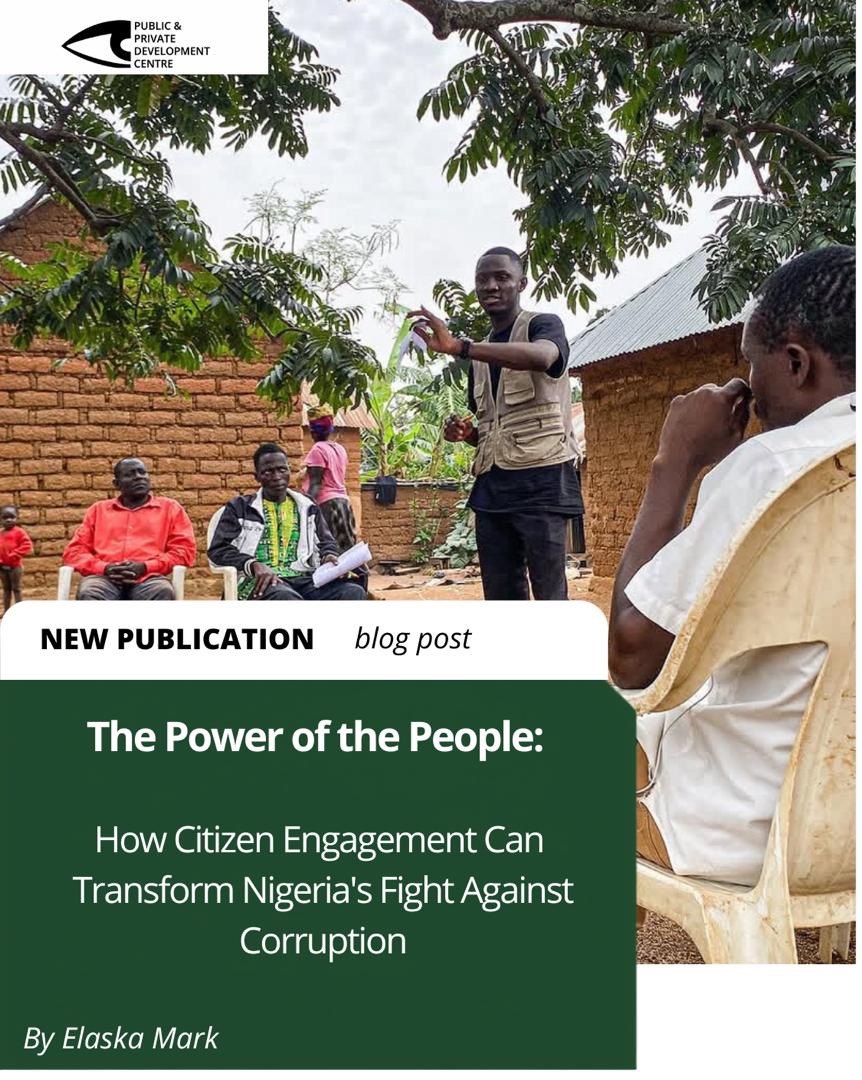
For four years, as a social entrepreneur and solution Journalist, I have walked the dusty roads of remote communities across northern Nigeria, documenting and reporting challenges of underserved communities' and political marginalization upheavals to the quiet resilience of everyday people. I have seen the best and worst of our nation, and if there's one truth I have come to understand, it's this: the fight against corruption, often perceived as a battle for the elite, is increasingly being won by the most unexpected of heroes, ordinary citizens.
I remember a conversation I had a few years ago with a community leader in Tadurga community, Kebbi State. We were discussing the abysmal state of their primary healthcare center. It is the mother who arrives at a primary healthcare centre only to discover that the medicines meant to be free have mysteriously disappeared. It is the graduate who loses a job opportunity because someone with connections was favoured. It is the community that watches a road project appear in government budgets year after year, yet remains nothing more than a dusty path.
For decades, Nigeria's fight against corruption has largely been framed as a battle between government institutions and corrupt individuals. We have created agencies, enacted laws, launched investigations, and secured convictions. Yet corruption continues to shape everyday life in ways that many citizens have come to see as normal.
The uncomfortable truth is that corruption thrives not only because institutions are weak, but also because citizens are often excluded from the processes that determine how public resources are allocated, spent, and monitored.
The future of Nigeria's anti-corruption efforts may therefore depend less on what happens inside government offices and more on what happens outside them.
I learned this lesson while engaging with communities. In several rural communities, citizens complained about abandoned projects, poor service delivery, and broken promises. Yet many had never seen a government budget, attended a town hall meeting, or submitted a request for information. The gap was not a lack of concern. It was a lack of access, awareness, and opportunity. Once communities were equipped with information, the story began to change.
The Freedom of Information Act, for example, remains one of the most underutilized anti-corruption tools in the country. While many Nigerians are quick to express frustration over poor governance, relatively few know they have a legal right to request information about government spending, contracts, and public projects.
Imagine the impact if communities routinely demanded answers about how constituency projects were implemented. Imagine if young Nigerians tracked local government budgets with the same energy they devote to following political campaigns on social media. Imagine if every abandoned project attracted sustained public questioning. You will agree with me that technology has made this easier than ever before. A young person with a smartphone can document an abandoned project, verify budget allocations online, and share evidence with thousands of people within minutes. Social media has become more than a platform for expression, it has become a tool for civic oversight.
The challenge we are facing in Nigeria today is how to transform online outrage into sustained civic action. A trending hashtag may attract attention for a few days, but lasting change requires citizens to participate consistently in governance processes attending public hearings, engaging elected representatives, monitoring projects, and demanding transparency at the local level.
This is particularly important because corruption is often discussed as a national problem while its effects are most visible locally. Citizens may not have direct influence over decisions made in Abuja, but they can influence what happens in their wards, local governments, and communities
One thing I want us to know as a country is that the fight against corruption is not just the responsibility of governments, lawmakers, and anti-corruptions agencies. But perhaps the greatest untapped force in this struggle is the Nigerian people themselves. When citizens move from frustration to participation, from complaints to collective action, and from silence to scrutiny, corruption loses one of its greatest allies.
Nigeria's transformation will not happen because our leaders decide to govern better. It will happen when citizens refuse to accept less than they deserve.
That is the true power of the people.